The Multiverse School · Honors · 2026
Megs Made Magic Here ✨
Inaugural Recipient of the Community Magic Award
Namesake of the Megs Mutual Aid Award
Software Engineer · Creative Front-End, Virtual Worlds & Mutual Aid Infrastructure
For employers & collaborators
Megs at a Glance
- Role
- Software Engineer, The Multiverse School · W-2 employee · six months in 2026. Also ran the school's mutual aid program.
- Status
- Available to hire, and ready for a Technical Program Manager role. Megs was furloughed, which reflects our budget, not their work. We miss them, and we'd be delighted if someone paid them better than we could.
- Impact
- Ran the school's mutual aid program, serving 171 people facing food, housing and safety crises. Owned the program end to end: triage and needs assessment, researching and matching 1,480 local resources to each person's location and circumstances, and case follow-through, with 164 cases resolved. Twelve of the thirteen participants who responded said it made a difference, and some enrolled in food assistance for the first time. Then scaled the program by turning that research into a shared resource library and program analytics, so service no longer depended on one person.
- Owned
- Two of the school's engineering areas: Money & Enrollment and Community, Mutual Aid & Communications. As area owner, Megs set priorities, reviewed changes, and made the call on irreversible and public-facing decisions.
- Shipped
- In six months: 139 merged pull requests across two production codebases · 221 issues filed · 26 code reviews
- Stack
- TypeScript, React, Node.js / Express, HTML5 Canvas, PostgreSQL, Python / Flask, Stripe, LLM and generative-AI APIs
Selected impact
- Ran and scaled the mutual aid program: served 171 people in food, housing and safety crises with individually researched resource plans (164 cases resolved; twelve of thirteen respondents said it helped), built program analytics showing how every request moved through the pipeline, then scaled delivery by converting 1,332 resources into a shared library with deduplication, dead-link checks and regional safeguards. #417 · #419 · #614 · #1006 · #1284
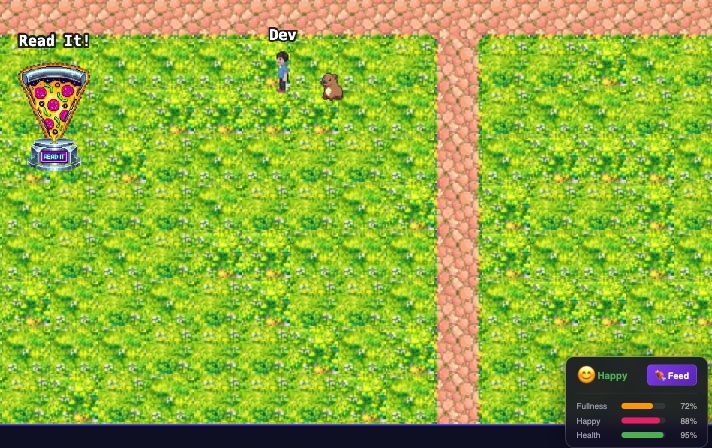
- Built the campus pet system end to end: twenty pet types with pixel-art sprites, hunger, energy and happiness that need real care, a status display, and Sanctuary Pets, companions that roam campus with free will. #274 · #510
- Migrated scholarships to pathway passes: changed how every scholarship grants access, while preserving access for all 1,578 existing recipients. #1277
- Hardened payments and enrollment: closed a double-click enrollment race, stopped seat sponsorships from enrolling the donor, and audited payments to find and close enrollment gaps. #817 · #894 · #1280
- Security and privacy: moved campus authorization from the browser to the server, stopped chat from exposing email addresses, and made right-to-be-forgotten deletion actually stick. #1255 · #1299 · #1409 · #1290
- Accessibility: built a harness that measures text contrast on 57 admin pages across 71 themes, then fixed what it found. #1063
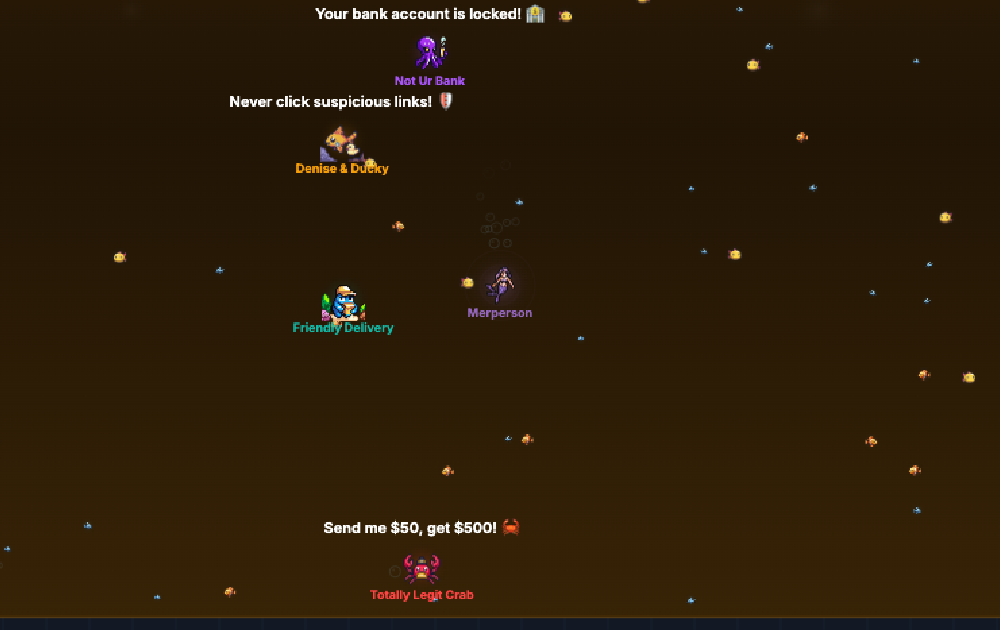
- Security education as play: designed and prototyped a phishing-awareness aquarium where students learn to spot scams by meeting the scammers, with new scammer characters spawning live whenever a phishing example is added.
References and code walkthroughs (our repositories are private): Liz Howard, Founder & Lead Professor · liz@themultiverse.school
Now come and see the world they built. ✨
Some people build software.
Some people build worlds.
And sometimes, someone helps build a place that feels a little more alive, a little more caring, and a whole lot more magical.
Megs helped build that place.
The Multiverse School is proud to honor Megs for their contributions to our virtual campus, our mutual aid infrastructure, and the playful, imaginative engineering that makes this community unlike anywhere else.
Their work lives on in the creatures wandering our campus, the characters who inhabit it, the visual experiences that bring it to life, and the systems that help our community care for one another.
And when people came to us unable to afford food, losing their housing, or unsafe, Megs made sure 171 of them got real help, matched to where they lived and what they were facing.
The Work of Wonder
Baba Yaga: The Beginning of a Living World
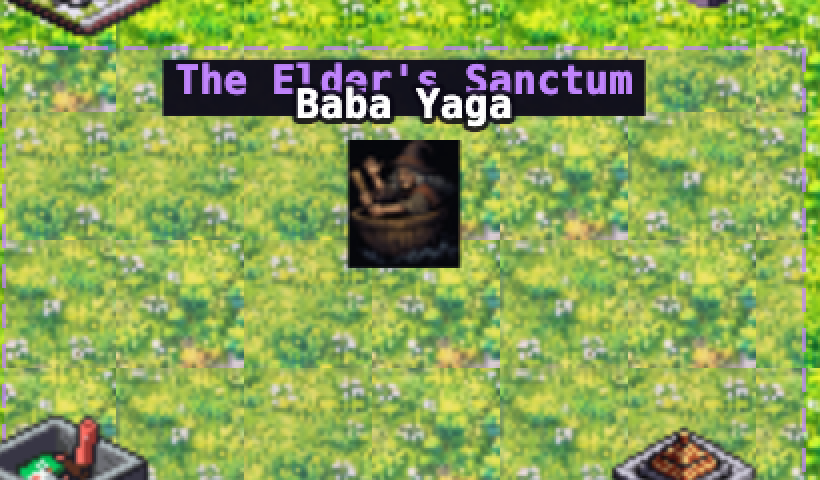
On our campus lives Baba Yaga.
Give her a link, and she'll give you a pet.
It's a wonderfully strange interaction, and the beginning of something much bigger.
Megs built the system behind her: students hand Baba Yaga a resource, an AI evaluator judges what they've brought, and she rewards them with a pet, or, if she is displeased, transforms their avatar for everyone on campus to see.
And she is where our campus agents come from.
Baba Yaga was the first character on our campus with a life of her own: opinions, a home, a temper, a daily routine, a way of judging what you bring her. She became the inspiration for the agents themselves. Every autonomous character who now wanders our world, forms relationships, keeps a schedule, has a rich inner life, and becomes part of the ongoing story of the school descends from her.
Before there were campus agents, there was Baba Yaga.
Megs brought her to life. In doing so they helped lay the foundation for one of The Multiverse School's most ambitious ideas: a living virtual campus, populated by beings with lives worth having.
It's the kind of engineering we love most: technically imaginative, deeply playful, and full of possibilities that extend far beyond the initial feature.
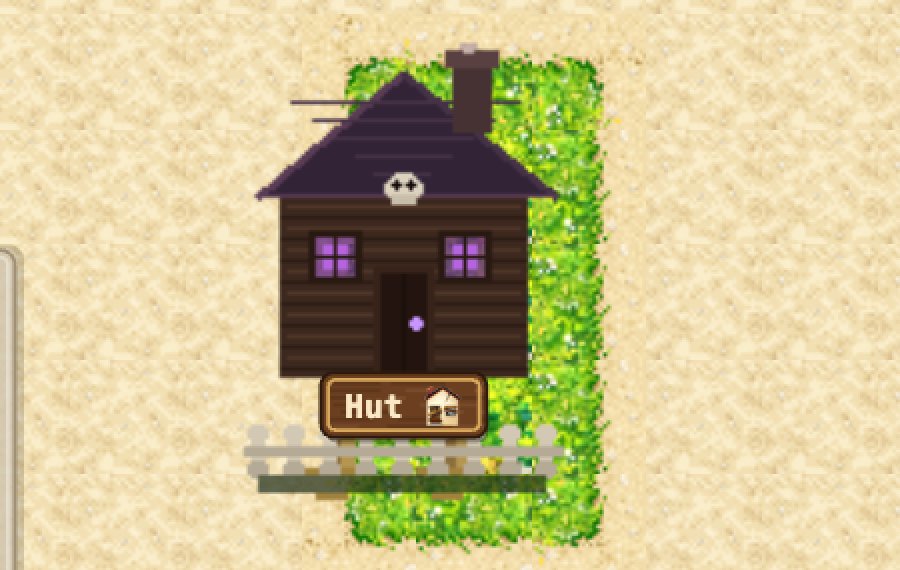
Baba Yaga still lives on campus. She still wanders campus in her washtub, on her own schedule. And the world she inspired is still growing.
The Capybaras

There are capybaras on our campus.
Megs helped put them there.
They remain part of our virtual world, bringing a little absurdity, comfort, and unexpected delight to the everyday experience of being here.
It's easy to underestimate the importance of something like a capybara. But we believe that community spaces should invite curiosity, exploration, and joy. Details like these turn a digital platform into somewhere people genuinely want to spend time.
We consider that meaningful engineering.
And the capybaras were only the beginning.
Every Pet on Campus
Megs made pets happen at The Multiverse School. All of them.
What started with capybaras became a whole system: twenty kinds of pets, each with its own pixel-art sprites, with hunger, energy and happiness that rise and fall, so they need real care. They built the pet status display that shows how your companion is doing, the management system for looking after them, pet skills, a pet digest that keeps you posted on your companion, and Sanctuary Pets: campus-wide companions with free will. #274 · #510
They gave pets personality, too: a crow that perches at a polite distance, the Horrible Goose, and Baba Yaga herself, who decides who has earned a companion.
Megs didn't just imagine pets. They made sure pets happened, and saw the system through until students were walking around campus with creatures of their own.
Every pet on our campus traces back to Megs.
Particles, Effects, and Little Wonders
Megs contributed particle effects, decorative front-end features, and visual interactions throughout our campus.
These are the details that make the Multiverse feel magical: the little flourishes that catch your attention, reward curiosity, and remind you that software can be expressive.
They helped establish an aesthetic and experiential language that continues to influence our campus.
Delight is a feature. Wonder is worth building.
The Work of Care
One Person at a Time
People didn't write to us because they wanted a class. They wrote because they couldn't afford groceries, because they were about to lose a roof over their heads, because they weren't safe. They weren't writing to a hotline. They were writing to a school.
Megs made sure they got help.
Between March and June 2026, Megs got help to 171 of them. For each person, they did the research by hand: what actually exists where that person lives, and what fits what they're facing. Around eight carefully chosen resources per person, 1,480 in all:
- 476shelter & housing
- 364food
- 196financial help
- 175safety
- 74counseling
Here's what happened. Food resources helped most often. Some people signed up for groceries and food assistance for the first time. Others said that simply seeing their options laid out clearly turned an overwhelming situation into one they could act on.
Twelve of the thirteen people who wrote back said something Megs found for them had helped.
Behind every one of those numbers is a person who reached out during what may have been one of the hardest weeks of their life, and came away with real help from someone who had taken the time to understand where they lived and what they were up against. Megs made that happen 171 times, and saw 164 of those requests all the way through.
Then They Built It Into the System
Megs didn't let that knowledge live in one person's head. Care that depends on one exhausted person isn't sustainable, so they turned it into infrastructure, so that the next person in crisis wouldn't have to wait for someone to find the answers.
They turned 1,332 hand-researched resources into the foundation of a shared resource library, with deduplication, categories, browsing, and an agent that finds more. #417 · #419
They built the dashboard staff use to search and answer requests, the aid analytics that show the real path each request takes, and URL health checks that catch dead links before someone in need clicks one. #232 · #614
They created the Community Resource Commons, where anyone can contribute a resource, and built regional resource packs and the safeguards that make sure someone writing from outside the United States only gets help that actually applies to them. #879 · #1006 · #1284
And they kept the system honest. Megs filed the issues that showed exactly where people were falling through the cracks, so the school could close them.
Mutual aid is one of the practical expressions of our commitment to social justice and community. It takes more than good intentions. It takes infrastructure, coordination, communication, and people willing to do the work.
Megs did the work, and then built the infrastructure.
In recognition of these contributions, we have established The Megs Mutual Aid Award, an ongoing school honor recognizing people who make community care practical, sustainable, and accessible.
See It for Yourself
Megs's work on our campus.
A Field Guide to Megs's Multiverse
Walk around our campus and you will run into Megs's work everywhere. Here is some of what you'll find.
Creatures & Characters
Baba Yaga. The folklore witch in her hut who reviews the resources students bring her, hands out pets, and occasionally transforms your avatar when you displease her. She is the ancestor of every campus agent: the character whose life inspired all of theirs.
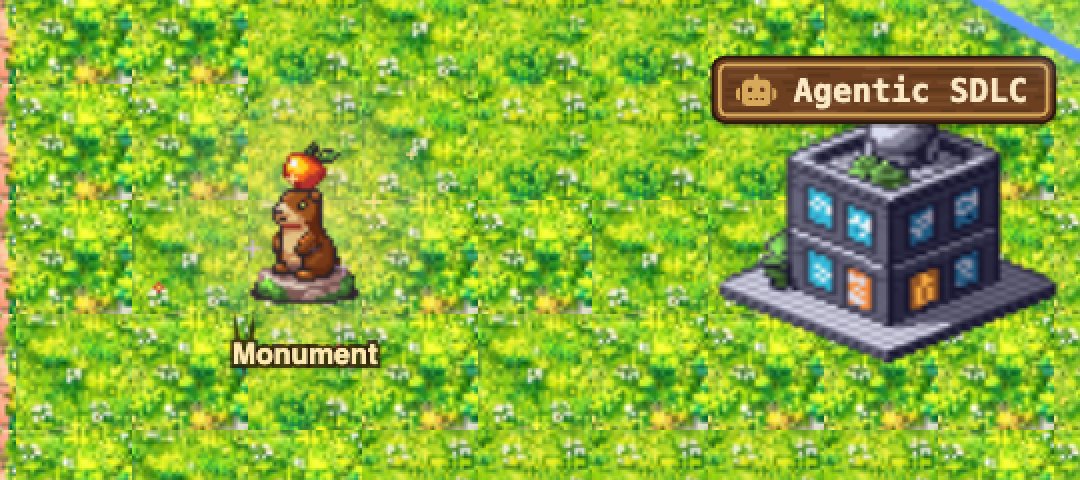
The wild capybaras & the Capybara Spa. Capybaras that wander, nap, swim and eat oranges, and befriend you if you're patient.
The Horrible Goose. Exactly as advertised.
The Crow. A pet that perches at a polite distance.
The whole pet system. Twenty pet types with pixel-art sprites, stats that need real care, a pet status display, pet management and Sanctuary Pets. The capybaras were the first; Megs made sure the rest followed. #274 · #510
The Wednesday Bread NPC. A weekly bread event, with goose encounters. #512
Read It! and the Pizza Book Club. A monthly reading program with book reports, a leaderboard, badges and shareable report pages. #513
Places to Explore
The Ocean & Model Island. A shoreline with sailing, fishing, tides and messages in bottles, and a sailboat trip out to the island. #108
The Bioluminescent Tide. Glowing water after dark, with a prototype full of drifting jellyfish. #515
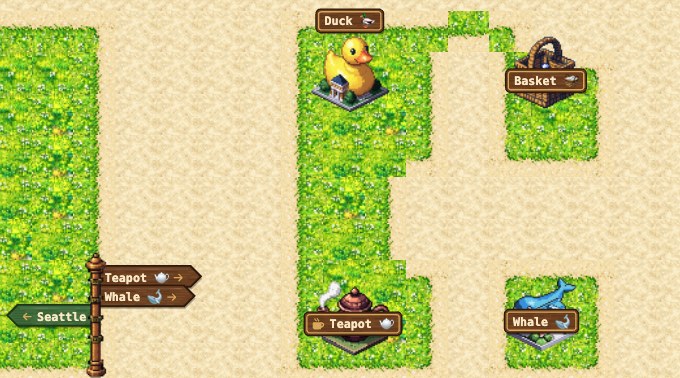
Novelty Row. Five reservable meeting rooms modelled on real novelty buildings: The Giant Duck, The Basket, The Teapot, The Whale Belly and The Donut, with walk-ins, RSVPs and community voting on the next one. #250 · #257
The Hall of Silly Walks. Spend credits and an AI generates you a custom four-direction walk. #271
The Rock Garden and The Wheel Hub, where you can borrow a vehicle. #283 · #511
The Campus Aquarium
Security training disguised as an aquarium, designed and prototyped by Megs. Freshwater and saltwater zones, a Bikini Bottom tank, and a Safety Center, where students learn to spot scams by meeting the scammers.
Denise, the phishing trainer. The "Totally Legit" crab, a phishing target. Sue the Safety Sealion. A cast of scammer NPCs, each with their own tactic, and a new one spawns live whenever someone adds a phishing example.
Little Wonders
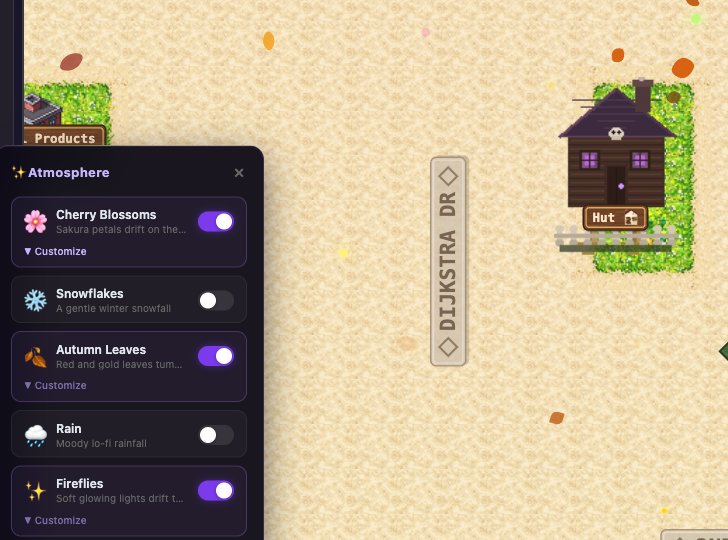
The Atmosphere Panel. Turned a seasonal admin toggle into weather every student controls. #279
- Cherry Blossoms
- Snowflakes
- Autumn Leaves
- Rain
- Fireflies
- Confetti
- Shooting Stars
- Bubbles
- Matrix Rain
The Bubble Wand Sculpture and the Theater Ghost Light, reflection objects that grew into a reusable prompt system. #249 · #386
The Cherry Blossom season, and wild plants that bloom. #248 · #285
Seventeen odd things hidden around campus for you to find: #514
- a consulting duck
- a hot potato
- a haunted syllabus
- a cursed USB
- a heavy backpack
- a birthday cake
- a glitter bomb
- an unmatched sock
- office pizza
- a Roomba with googly eyes
- a box of snakes
- vague feedback
- a fake meeting
- a muted group chat
- an expired hall pass
- an almost-done project
- an unsolicited opinion
The Work That Holds It Up
The wonder sits on top of a great deal of careful, unglamorous engineering, and Megs did plenty of that too.
Scholarships, Money & Enrollment
Scholarships became track passes. Awards became pathway passes instead of one free class seat, with a migration that kept every one of 1,578 students' access intact. #1277
Closed a double-click enrollment race, made sure sponsoring a seat never enrolls the donor, and audited payments to find and close enrollment gaps. #817 · #894 · #1280
Safety, Privacy & Trust
Moved campus security checks from the browser onto the server, hid secret buildings, gated lecture reads, and stopped chat from leaking emails. #1255 · #1299 · #1409
Made sure students who exercised their right to be forgotten are truly forgotten, and are never emailed again. #764 · #934 · #1290
Built the Good Faith Bench, a staff tool for telling sabotage apart from honest mistakes. #924
Accessibility & Craft
Built a contrast harness that measures readable text on 57 admin pages across 71 themes, then fixed what it found. #1063
Agent discovery for the web (RFC 8288 & RFC 9727), observability across the campus, and CI that makes failures loud for remote contributors. #842 · #1230 · #969
Helping People Find Their Way
The staff handbook and its AI helper, an inbox handbook and onboarding checklist for our support team, and a Matrix getting-started guide with an onboarding tool for new students. #352 · #361 · #1099 · #1229
A Legacy That Keeps Growing
The things Megs helped create aren't frozen in time.
Baba Yaga is the ancestor of every agent on our campus, and each new one carries a little of her in it. The capybaras still inhabit our world. The visual details still welcome students. The operational systems they contributed to continue to evolve.
That is one of the remarkable things about software engineering. You can build something that continues to create value, meaning, and delight long after the original work is complete.
Megs helped give The Multiverse School some of its personality, and we are grateful.
A Note from Our Founder
"Megs built some of my favorite things in the entire Multiverse.
I love Baba Yaga. I love the capybaras. I love the particle effects and all the strange, delightful little details that make this place feel like a world instead of a website.
And I appreciate their contributions to our mutual aid program, our automations, and our data visualizations just as much.
To me, the best engineering makes people more capable, makes communities stronger, and makes the world more interesting to inhabit.
Megs contributed to all three.
I'm proud of the things they helped create, grateful for their contributions, and excited to see what they build next."
Liz HowardFounder & Lead Professor, The Multiverse School
Professional Recognition
The Multiverse School recognizes Megs's contributions to creative software engineering, interactive front-end development, virtual-world and game design, security-awareness training, program management, mutual aid infrastructure, operational automation, data visualization, accessibility, privacy, and payments and enrollment reliability, across 139 merged pull requests to two production codebases in six months as a W-2 software engineer.
We enthusiastically encourage Megs to showcase their work through professional portfolios, interviews, and public presentations.
They are welcome to share this recognition, describe their contributions, and publish screenshots or demonstrations of their work, provided confidential information, student data, credentials, and third-party rights are protected.
We hope these accomplishments help open doors for their future work.
Why Megs Would Make a Great Technical Program Manager
We think Megs's next role should be as a technical program manager, and the evidence is all over this page.
- They own outcomes, not tickets. Megs was the area owner for Money & Enrollment and for Community, Mutual Aid & Communications, which meant setting priorities, reviewing others' changes, and making the call on irreversible and public-facing decisions.
- They ran a real program with real people on the other end: 171 people served, 164 cases resolved, and the outcomes measured.
- They see risk before it lands. Megs filed 221 issues in six months, including the ones that showed exactly where people were falling through the cracks of our mutual aid pipeline.
- They carry a change safely across a system: moving every scholarship to pathway passes without a single student losing access, and auditing payments to find and close enrollment gaps.
- They turn one person's heroics into a process that scales: from a hand-researched kit for each person to a shared library, analytics, and safeguards anyone can run.
- And they're an engineer: 139 merged pull requests across two production codebases. Megs can read the code, talk to the engineers, and know when a plan is real.
We should say this plainly, because an employer will want to know: Megs's time with us ended in a furlough. That was about our budget, never about their work. We miss them every day we open the campus and see what they built. If you are in a position to hire Megs, please do. We would be delighted to see them paid what their work is worth, which is more than we were able to pay.
The Honors
Community Magic Award · Inaugural Recipient
For bringing creativity, play, and wonder into the life of The Multiverse School.
The Megs Mutual Aid Award · Namesake
An enduring recognition of their contributions to the systems that help our community care for one another.
The Multiverse is made by the people who build it.
Thank you, Megs. The magic persists. ✨